The Foundation
The Giboney Foundation Newsletter
Summer 2026
Insights from the Executive Director
Discuss challenges faced by minority students and young adults
A view into Giboney Foundation programs and efforts that are under development
Shining a light on success stories
Highlighting fundraising opportunities and how you can donate to our mission

01
Director's Notes
Craig Newell, Executive Director
The Giboney Foudnation
Is College Always the Best Investment?
College can be a strong financial investment, but the payoff isn't uniform - it depends heavily on factors that often intersect with a student's background. Research consistently shows that, on average, a bachelor's degree still yields significantly higher lifetime earnings than a high school diploma alone, and this holds true across racial, ethnic, and socioeconomic groups. For first-generation students, students of color, and those from lower-income families, a degree can be an especially powerful tool for economic mobility - often making a bigger relative difference in lifetime earnings than it does for students who come from more affluent backgrounds, since it opens doors that family networks or inherited wealth might otherwise provide.
At the same time, the investment carries real risks that fall unevenly. Students from underrepresented or low-income backgrounds are statistically more likely to take on higher debt loads, attend under-resourced institutions with lower graduation rates, or leave without finishing. A degree that isn't completed rarely pays off the way a finished one does. Choice of major, school selectivity, and completion also matter enormously: a degree from a program with strong job placement in a growing field tends to pay off far faster than one in an oversaturated field from a school with weak outcomes. So "college" isn't a single investment with one return; it's really thousands of different investments depending on institution, field of study, financing method, and how well-matched the school is to the student.
Given this, the honest answer is that college is often a very good investment for diverse students specifically because of the mobility it can provide, but the odds of a strong outcome improve a lot with careful choices. Selecting affordable options, understanding debt terms, choosing in-demand fields, and prioritizing schools with strong graduation and post-grad employment rates for students like them becomes critical factors in students’ decision making. Some economists and commentators argue increasingly that alternative pathways (trades, apprenticeships, certifications) deserve more attention as parallel investments, especially given rising tuition costs - a view worth weighing alongside the traditional college case rather than treating a four-year degree as the only route to opportunity.
02
The Target
We will highlight a unique challenge our youth and young adults face as they prepare for their next stages in life.
Financing Your Future: Paying for Higher Education as an Underrepresented Student
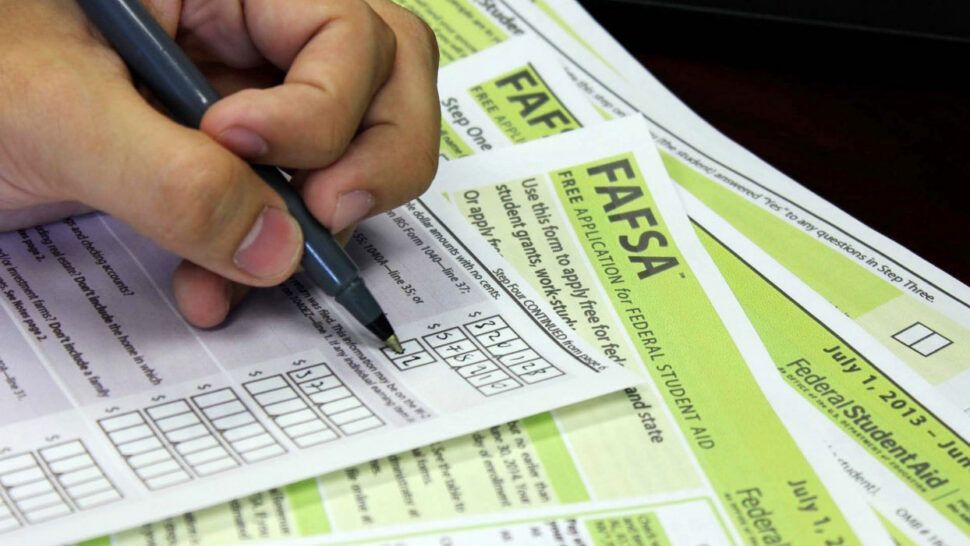
For millions of Americans, a college degree remains one of the most reliable paths to economic mobility. Yet the promise of higher education is only as good as a student's ability to actually afford it, and that ability varies dramatically along lines of race, income, and family background. Underrepresented students, including first-generation college attendees, students of color, students from low-income households, and students from rural or historically marginalized communities, often face a financing landscape that is structurally harder to navigate than the one available to their more privileged peers. Understanding these challenges, and the tools available to address them, is essential for students, families, counselors, and institutions alike.
Key Challenges
1. Limited family wealth and financial cushioning. Tuition, fees, housing, and living costs must typically be paid up front or financed through loans, and families with less accumulated wealth have a smaller cushion to draw on. Because wealth gaps across racial groups are often larger than income gaps, two families with similar incomes may have very different capacities to pay for college without borrowing heavily.
2. Complexity of the financial aid system. The Free Application for Federal Student Aid (FAFSA) and the broader aid process are notoriously complicated. First-generation students, who make up a disproportionate share of underrepresented students, often lack a parent or older sibling who has navigated the system before, leaving them to decode financial aid award letters, verification requests, and appeal processes largely on their own.
3. Disproportionate reliance on debt. Students from lower-income and underrepresented backgrounds are statistically more likely to borrow, and to borrow more, than their peers. This debt burden can affect major choice, time-to-degree, and even whether a student completes their degree at all - since dropping out with debt but no diploma is one of the worst possible financial outcomes.
4. Under-resourced K–12 preparation and advising. Students from under-resourced schools frequently have less access to college counselors, AP or dual-enrollment courses, and structured guidance about scholarships or elite institutions that offer generous need-based aid. This can push capable students toward more expensive or less generous options simply because they were never informed of better ones.
5. The "hidden curriculum" of higher education finance. Beyond tuition, students must budget for textbooks, technology, transportation, and unexpected emergencies. Underrepresented students are more likely to be balancing coursework with paid employment or family caregiving responsibilities, which can extend time-to-degree and increase total cost.
6. Institutional and geographic mismatch. Research shows that many high-achieving, low-income students "undermatch" (enrolling in less selective institutions than their academic record would support) often because they are unaware that selective schools may actually be more affordable due to strong need-based aid, or because of proximity, cultural fit, and family expectations.
Potential Solutions
The good news is that a growing ecosystem of tools, programs, and strategies exists to help offset these barriers. Some of the most effective approaches include:
• Maximize free money first. Prioritize grants and scholarships, which don't need to be repaid, before considering loans. This includes federal Pell Grants, state grants, and institutional need-based aid.
• File the FAFSA (and CSS Profile, if required) early and every year. Aid is often awarded on a rolling or first-come basis; missing deadlines can mean missing out on limited funds.
• Seek out college access programs. Organizations such as College Possible, QuestBridge, Posse Foundation, and TRIO/Upward Bound provide free application support, mentorship, and in some cases full-tuition scholarship pipelines specifically for underrepresented and first-generation students.
• Look beyond the sticker price. Many selective private colleges have large endowments and meet 100% of demonstrated financial need - meaning the "true cost" for a low-income student can be lower than at a less selective public school.
• Use net price calculators. Every college is required to post one; these tools give a realistic, individualized estimate of cost before a student even applies.
• Explore identity- and community-specific scholarships. Many organizations, employers, and foundations offer scholarships targeted at first-generation students, students of color, women in STEM, LGBTQ+ students, veterans, and other specific communities.
• Consider community college transfer pathways. Starting at a community college and transferring to a four-year institution can dramatically cut total cost, especially when paired with guaranteed transfer agreements.
• Take advantage of employer tuition assistance and apprenticeships. A growing number of employers offer tuition reimbursement or "earn and learn" pathways, especially in healthcare, tech, and skilled trades.
• Borrow strategically, not maximally. When loans are necessary, prioritize federal loans (which offer income-driven repayment and forgiveness options) over private loans, and borrow only what is needed rather than the full amount offered.
• Build financial literacy early. Programs that teach budgeting, credit, and loan repayment, ideally starting in high school, help students make more informed borrowing decisions and avoid costly mistakes.
• Lean on campus support offices. Financial aid offices, TRIO programs, and first-generation student centers on campus can help with everything from emergency aid funds to appealing an aid package after a change in family circumstances.
• Appeal aid offers when circumstances change. Many students don't realize that financial aid awards can be appealed, for job loss, medical expenses, or a significant change in family income, often resulting in additional aid.
Conclusion
Financing higher education is rarely a simple transaction, and for underrepresented students, it is often an obstacle course layered on top of the usual academic demands of college. But the challenges are not insurmountable. With early planning, informed use of the aid system, targeted scholarship and mentorship programs, and strategic (rather than maximal) borrowing, students can significantly reduce both the cost and the risk of pursuing a degree. The broader goal, for families, counselors, institutions, and policymakers alike, should be to close the information and access gaps that currently determine who gets to make a fully informed choice about paying for their future, so that a student's potential, rather than their zip code or family history, determines their opportunity to succeed.
03
Under Construction
We will spotlight programming by The Giboney Foundation that is being developed to directly support students and our communities
Financial Management and Investing for Young Adults
Amidst government shutdowns and company layoffs across a number of industries, financial management is more important than ever. With that in mind, we would like to reiterate the announcement of our financial management programs:
The Giboney Foundation is developing a comprehensive financial literacy program tailored specifically for young, minority adults. Partnered with Everfi, we aim to empower participants to make informed decisions, cultivate responsible financial habits, and secure their financial futures.
Program objectives:
- Financial Management Education: Provide participants with foundational knowledge and practical skills in budgeting, saving, debt management, and financial planning.
- Stock Market Investment Education: Introduce participants to the fundamentals of investing, including risk assessment, asset allocation, portfolio diversification, and the mechanics of stock market participation.
The first course, launched in November 2024 is the Introduction to Financial Literacy for High School Students. This free, newly updated financial literacy foundations course teaches students how to make informed financial decisions that promote financial well-being over their lifetime. The interactive lessons translate complex financial concepts in ways that help students develop actionable strategies for managing their finances. Topic areas include: Consumer Skills, Smart Money Habits, Budgeting, Checking Accounts, Saving Accounts, Credit and Debit Basics, Education ROI, Education & Financial Aid, Exploring Jobs & Careers, Beginning Employment, and Insurance Basics.
Please visit
https://www.thegiboneyfoundation.org/student-programs for more information.
04
The Spotlight
Highlighting success stories of The Giboney Foundation and our supporters!
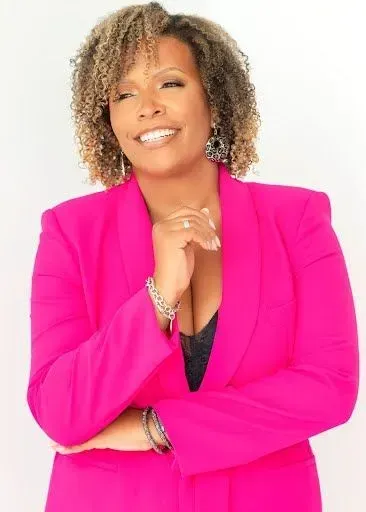
Qiana Newell - Law Enforcement leader, women's empowerment champion, and Giboney Foundation board member
A native of Gary, Indiana, Qiana holds a Bachelor of Arts in Psychology and Sociology and a Master of Arts in Public Policy and Administration. She is a certified life, goal-setting, career, and happiness coach through Transformation Academy and earned a certification in Leading Diversity, Equity, and Inclusion in 2021.
After beginning her career with the U.S. federal government in 2007, Qiana recognized the importance of building authentic connections and creating opportunities for women to thrive. That vision led her to found Wholelistic For Her in 2012 as a small networking group for 12 women. In 2018, she expanded the organization to include coaching, wellness workshops, and curated domestic and international wellness retreats. Today, Wholelistic For Her is a nationwide community of more than 1,400 women dedicated to empowerment, self-care, and personal growth.
An accomplished keynote speaker and panelist, Qiana continues to inspire women through her leadership, advocacy, and unwavering commitment to advancing personal empowerment and fostering inclusive communities.
Qiana leads law enforcement student programs for The Giboney Foundation, and is one of the founding board members.
05
The Funding
Please participate in one of our upcoming fundraisers or provide a donation directly to the foundation to support our scholarship, mentorship, and community programming efforts!
2027 Giboney Foundation
Tee Off in Thailand Golf Fundraiser
January 10-16, 2027 - Pattaya, Thailand
The Giboney Foundation, partnering with All Things Golf Studio and Curated Escapes, welcomes you to a bucket-list golf experience while supporting the next generation of leaders. This experience includes Thailand tours, top-tier golf experiences, 5-star hotel accommodations, and unparalleled nightlife. Click to learn more!
Contact us any time